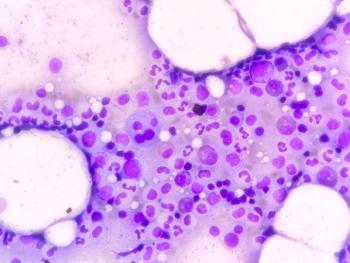
An MRD-guided strategy incorporating teclistamab-daratumumab intensification produced deep responses in newly diagnosed high-risk multiple myeloma, although infections affected more than three-quarters of treated patients.
Pharmacy Practice in Focus: Oncology
FDA clears teclistamab plus daratumumab after first relapse, delivering striking PFS gains—plus practical tips to manage CRS, ICANS, and infections.
Multiple myeloma (MM) is characterized by end-organ damage, such as hypercalcemia, renal failure, anemia, or lytic lesions, or biomarkers of disease, such as greater than 60% plasma cells in the bone marrow, involved to uninvolved serum-free light chain greater than or equal to 100, and more than 1 focal lesion. Unfortunately, this is a chronic disease, and all patients ultimately relapse.1
Daratumumab (Darzalex; Janssen Biotech, Inc) is an immunoglobulin (Ig) G1 κ monoclonal antibody that binds to CD38. This receptor is a type II transmembrane glycoprotein that has implications in cell signaling and is overexpressed in clonal plasma cells. Once daratumumab is bound, it activates primarily complement-dependent cytotoxicity and, to an extent, antibody-dependent cellular cytotoxicity, antibody-dependent cellular phagocytosis, and direct cytotoxicity due to Fc receptor–mediated apoptosis.2 Daratumumab is available as an intravenous (IV) infusion dosed at 16 mg/kg weekly for 8 doses, every other week for 8 doses, and then monthly thereafter.3 A subcutaneous formulation is available in combination with hyaluronidase, dosed as a flat dose of 1800 mg in the same schedule.4
In clinical trials, daratumumab was first evaluated in the relapsed/refractory setting.5 Patients were included if they progressed after at least 2 prior lines of therapy, such as immunomodulatory agents, proteasome inhibitors, traditional chemotherapy, and an autologous stem cell transplantation. In this context, patients showed an overall response rate of 36%. This favorable response led to an initial FDA approval in 2015.
Additional trials, such as APOLLO (NCT03180736), CASTOR (NCT02136134), and CANDOR (NCT03158688), have expanded the approval for the relapsed setting in combination with pomalidomide, bortezomib, and carfilzomib, respectively. Trials such as GRIFFIN (NCT02874742), CEPHEUS (NCT03652064), and PERSEUS (NCT03710603) have also led to approval for newly diagnosed patients.6
The MajesTEC-3 study (NCT05083169) assessed daratumumab in combination with teclistamab (Tecvayli; Janssen Biotech, Inc), a novel bispecific IgG4 antibody that binds to CD3 on T cells and BCMA on malignant plasma cells—leading to T-cell activation and myeloma cell death.7,8 The combination was initially approved in the relapsed/refractory setting based on the MajesTEC-1 trial (NCT03145181 and NCT04557098), a phase 1/2 study that enrolled patients who had progressed after at least 3 prior lines of therapy. The overall response rate was 63%, with 39.4% achieving a complete response or better.7
Teclistamab in combination with daratumumab was approved by the FDA on March 6, 2026, for patients with MM who have relapsed after 1 prior line of therapy (including lenalidomide and a proteasome inhibitor), based on the MajesTEC-3 trial.
This study included patients who had received 1 to 3 prior lines of plasma cell–directed therapy.9 Patients were randomly assigned to either daratumumab-teclistamab (Tec-Dara) or provider’s choice between daratumumab, pomalidomide (Pomalyst; Bristol Myers Squibb), and dexamethasone (DPd) or daratumumab, bortezomib, and dexamethasone (DVd). Initially, teclistamab was administered in flat step-up doses but, due to increased adverse effects, returned to the package insert–recommended dosing. Patients with previous CD38 monoclonal antibody exposure were allowed to participate in the study; however, they could not be refractory.
Tec-Dara was administered to 291 patients, with 296 patients receiving investigator’s choice. Both groups were relatively balanced. The median age of this patient population was 64 years (range, 25-88). High-risk cytogenetics were present in 36.5% of Tec-Dara patients and in 35.4% of patients in the provider’s choice arm. The median number of prior lines of therapy was 2 (range, 1-3). Proteasome inhibitor refractoriness was present in 40.2% of Tec-Dara patients and 35.1% of the control arm. Similarly, immunomodulatory refractoriness was noted to be 84.9% in the Tec-Dara arm and 85.5% in the DPd/DVd arm. Immunomodulatory agent exposure was 100% in both groups. Only 5.3% of patients had previous exposure to an anti-CD38 monoclonal antibody.
The median follow-up of this study was 34.5 months (range, 0.03-45.3). The estimated 36-month progression-free survival (PFS) was 83.4% with Tec-Dara and 29.7% in the DPd or DVd group (HR, 0.17; 95% CI, 0.12-0.23; P < .001). PFS benefit was seen across all prespecified subgroups. The overall response rate was significantly higher with Tec-Dara (89%) than with DPd or DVd (75.3%) (risk ratio, 1.18; 95% CI, 1.09-1.27). Moreover, this response was noted to be deeper with Tec-Dara (Figure). The MRD negativity (10-5) was higher with Tec-Dara at 58.4% than in the control arm at only 17.1%. The duration of response was not evaluable with Tec-Dara vs 23.5 months with DPd/DVd. This was parallel to the median duration of treatment of Tec-Dara at 32.4 months, with the control arm only achieving 16.2 months.
FIGURE 1 HERE
The positioning of the Tec-Dara combination regimen within the current therapeutic landscape remains complex. On one hand, this regimen enables earlier access to a T cell–engaging therapy, analogous to chimeric antigen receptor (CAR) T-cell therapy, including agents such as ciltacabtagene autoleucel. Thus, it may represent a valuable alternative for patients who are not candidates for CAR T-cell therapy but would benefit from a T cell–redirecting approach.
Conversely, the incorporation of daratumumab in the second-line setting presents a notable challenge. In the modern treatment paradigm, quadruplet induction regimens that include daratumumab are increasingly standard, thereby reducing the population of daratumumab-naive patients. Indeed, in the MajesTEC-3 study, only a small proportion of enrolled patients had prior exposure to daratumumab; in the Tec-Dara arm, just 5.2% had previously received anti-CD38 therapy.9 In addition, the recent approval of daratumumab for high-risk smoldering MM is likely to further expand the population of patients exposed to anti-CD38 therapy before reaching the second line of treatment.
The patients most likely to derive benefit from the Tec-Dara combination are those who remain daratumumab-sensitive. This includes individuals receiving maintenance therapy with lenalidomide alone, either following induction with a triplet regimen such as bortezomib, lenalidomide (Revlimid; Bristol Myers Squibb), and dexamethasone, or those who discontinued daratumumab sufficiently long ago to potentially retain responsiveness. Additional studies with BCMA-directed bispecific antibodies have had similar results. The MagnetisMM-5 study (NCT05020236) looked at elranatamab (Elrexfio; Pfizer Inc) in patients who had received at least 1 prior line of therapy and had shown positive results. Subsequent publications will elucidate the benefit in combination with daratumumab and in patients who have had CD38 exposure. Similarly, MajesTEC-9 (NCT05572515) will assess teclistamab in a CD38 monoclonal antibody–refractory population.
This regimen may be particularly well suited for patients whose disease kinetics or logistical circumstances render CAR T-cell therapy less feasible. This includes individuals with rapidly progressive disease who cannot accommodate the manufacturing timeline required for cellular therapies, as well as those facing barriers such as geographic distance from specialized centers or lack of adequate caregiver support.
In these contexts, the Tec-Dara combination offers a pragmatic and effective treatment option that can be delivered in a more accessible care setting, potentially closer to the patient’s home. An alternative in the second-line setting is the daratumumab, carfilzomib (Kyprolis; Onyx Pharmaceuticals, Inc), pomalidomide, and dexamethasone regimen, which may be preferable in situations where the management of teclistamab-associated cytokine release syndrome (CRS) and immune effector cell–associated neurotoxicity syndrome (ICANS) is not feasible or optimal.
Adverse drug reactions included CRS and ICANS. These are associated with T-cell redirection, and the risk has led to the implementation of a Risk Evaluation and Mitigation Strategy Program. Infections are a concern for these patients, and supportive care such as varicella prophylaxis, Pneumocystis jirovecii prophylaxis (PJP), and treatment of hypogammaglobulinemia is recommended. Supportive care is an important aspect of treatment with teclistamab in combination with daratumumab, primarily to reduce risks of CRS, hypersensitivity reactions, and infections. Acetaminophen 650 mg to 1000 mg IV or orally, diphenhydramine 50 mg IV/orally, and dexamethasone (20 mg with daratumumab, ≥ 16 mg with teclistamab) IV/orally 1 to 3 hours prior to the first dose of daratumumab and first 3 doses of teclistamab reduces the risk of both CRS with teclistamab step-up and hypersensitivity.
Following the first 3 doses of teclistamab, prophylaxis for CRS is not required unless a patient has experienced grade 3 CRS with a previous dose. Observation is recommended in case of CRS or hypersensitivity, particularly after initial doses. Monitoring for at least 6 hours after the first dose of daratumumab-hyaluronidase, 3 hours after the second dose, and 1 hour after subsequent doses was required in the study protocol. For subsequent doses of daratumumab, consider that premedications and monitoring may align with institution-based protocols for other daratumumab-containing regimens. Further premedication and monitoring after the first 1 to 3 doses of daratumumab are often omitted due to limited benefit.10-14 For the prevention of infections, appropriate vaccinations, herpes simplex virus (HSV) and varicella zoster virus (VZV) prophylaxis, PJP prophylaxis, and intravenous immunoglobulin (IVIG) replacement are important considerations. Consensus recommendations include HSV/VZV prophylaxis with acyclovir/valacyclovir and PJP prophylaxis with trimethoprim-sulfamethoxazole (or alternative) for all patients during therapy.15 For patients who become neutropenic, G-CSF is recommended (grade ≥ 3), and antibacterial and antifungal prophylaxis with levofloxacin and fluconazole should be considered if neutropenia is prolonged. Though these and most other guidelines include monthly IgG monitoring with IVIG for IgG levels less than 400 mg/dL (preemptive therapy), one consensus recommendation includes prophylactic IVIG for all patients beginning month 2 without regard to IgG.16 In one retrospective analysis of patients on bispecific antibodies for MM, infection occurred in 65.7% of patients despite VZV and PJP prophylaxis. An infection occurred in 73% of patients not receiving prophylactic IVIG vs 22.5% of patients receiving IVIG (HR, 0.14; P < .001).
The impact of prophylactic IVIG was primarily on the incidence of grade 2 infection, with minimal impact on grade 3 to 5 infection.17 In a recent systematic review including 5 retrospective publications, 3 demonstrated a significant reduction in infection, while 2 did not find a significant impact.18 Further prospective, randomized studies are needed to ensure that prophylactic IVIG will reduce the risk of overall and severe infections. It should be noted that the MajesTEC-3 trial did include a protocol amendment that recommended IVIG in all patients. This, along with the emerging data, has also led to a package insert update recommending IVIG replacement in patients with hypogammaglobulinemia. All patients with MM have an increased risk of thromboembolic risk, and therefore aspirin, direct-acting oral anticoagulants, or low-molecular-weight heparin should be considered based on risk factors. All patients receiving therapy for myeloma should receive a bisphosphonate or denosumab for at least 2 years to reduce the risk of skeletal-related events.6
The dosing schedule utilized in the MajesTEC-3 study and reflected in subsequent regulatory guidance is complex and operationally demanding. In cycle 1, daratumumab is administered on day 1, followed by step-up dosing of teclistamab: 0.06 mg/kg on day 2, 0.3 mg/kg on day 4, and the first full treatment dose of 1.5 mg/kg on day 8, at which point daratumumab is coadministered. Both agents are then continued weekly through cycle 2. Beginning cycle 3, the teclistamab dose is escalated to 3 mg/kg administered every other week in combination with daratumumab through cycle 6, after which both agents transition to monthly dosing.
Strict temporal constraints are required to mitigate toxicity. Specifically, the first step-up dose of teclistamab must be administered at least 20 hours after subcutaneous daratumumab on cycle 1 day 1, with a minimum interval of 2 days between step-up doses. The initial 1.5 mg/kg treatment dose must occur at least 2 days after the second step-up dose, followed by intervals of at least 5 days between subsequent 1.5 mg/kg doses (or prior to transition to 3 mg/kg dosing) and at least 12 days between 3 mg/kg doses. When administered on the same day, teclistamab should follow daratumumab by at least 3 hours. Additionally, if daratumumab is delayed for more than 3 months, the 3-hour or more separation should be reestablished upon reinitiation.9
Despite its rigor, this schedule presents several clinical and operational challenges in routine practice. Infusion-related reactions to daratumumab, including drug-induced fever, may overlap with early manifestations of CRS associated with teclistamab, complicating clinical assessment and potentially leading to overtreatment. Although the trial protocol mandated a 20-hour or more separation between initial doses, replicating this timing in high-volume infusion centers is often impractical.
Furthermore, same-day administration of daratumumab and the first full dose of teclistamab, separated by at least 3 hours in the trial, can be difficult to implement within standard infusion workflows. From a health systems perspective, inpatient monitoring requirements for CRS may result in the administration of high-cost agents such as daratumumab in the inpatient setting, where reimbursement is suboptimal. Consequently, many institutions preferentially shift such therapies to the outpatient setting when feasible.
To address these challenges, institutions such as Mass General Brigham and Dana-Farber Cancer Institute have adapted the regimen to improve feasibility. In this modified approach, teclistamab step-up dosing is administered as a distinct “cycle” (Table). Following a 1-week interval, allowing for resolution of CRS and ICANS, teclistamab and daratumumab are initiated together, separated by approximately 15 minutes, to begin the weekly combination phase. This pragmatic adjustment preserves therapeutic intent while enhancing safety monitoring, workflow efficiency, and financial sustainability in real-world practice. Alternatively, institutions using outpatient monitoring—particularly community centers without weekend availability—may consider initiating treatment on Mondays only.
As with teclistamab monotherapy, the label states that patients should be hospitalized for 48 hours following the first 2 doses, and after the first treatment dose, they should remain within proximity to a health care facility and be monitored daily for 48 hours. The MajesTEC-3 protocol allowed for outpatient administration and monitoring (≥ 30 minutes) for appropriate patients. Outpatient administration and step-up dosing of bispecifics such as teclistamab may decrease overall cost and health care resource utilization and support improved access in the community. One European expert panel recommends that outpatient administration of teclistamab should be used for patients with an appropriate cognitive status, caregiver presence, and close proximity to the hospital. Real-world experience has demonstrated acceptable safety with this strategy, with mostly low-grade CRS/ICANS, which resolved with supportive care.19 Authors’ institutions are using an outpatient-only approach for appropriate patients according to internal guidelines for patient selection.
MajesTEC-3 treatment included daratumumab-hyaluronidase subcutaneous, which is generally preferred for shorter administration, monitoring, and hypersensitivity reactions. However, daratumumab IV could be considered if preferred for clinical or operational reasons, for example, if inpatient administration is required. Tocilizumab (Actemra; Genentech), an IL-6 antibody often used in CRS management, may be considered in the prophylactic setting. Tocilizumab 8 mg/kg was given 1 to 4 hours prior to the first or second teclistamab step-up dose; the CRS rate significantly decreased across several retrospective, single-center reviews while maintaining similar efficacy.20 Based on these data, National Comprehensive Cancer Network guidelines suggest that prophylactic tocilizumab may be considered prior to the first dose to reduce the risk of CRS.
Dose reductions of teclistamab and daratumumab are not recommended; rather, toxicities are managed through supportive care and dose delays. Treatment should not be initiated in patients with an active infection and should be held for infections grade 3 or higher occurring during therapy until they are grade 1 or lower. Consider interrupting treatment with both teclistamab and daratumumab for an absolute neutrophil count less than 0.5×10⁹/L, platelet count less than 50x109/L, and hemoglobin less than 8 g/dL. If CRS and/or ICANS are suspected, teclistamab and daratumumab should be held until complete resolution (at least 12 hours since last fever without antipyretics and at least 24 hours since last tocilizumab). If a patient experiences grade 3 or higher nonhematologic toxicities, teclistamab and daratumumab should be held until grade 1 or lower. After a dose delay, review the teclistamab package insert to determine whether any step-up doses need to be repeated.
Tec-Dara is a novel second-line option that may offer patients with MM deep and durable responses. However, its efficacy in the era of quadruplet- and CD38-exposed patients is unknown. Additional studies, such as MajesTEC-9, will confirm its benefit. This regimen risks CRS, ICANS, and, most importantly, infections. All patients should receive antiviral prophylaxis, PJP prophylaxis, and IVIG replacement therapy. The treatment plan described in MajesTEC-3 can be challenging to replicate in any institution. The administration of daratumumab as an inpatient is a financial burden on institutions, while in the ambulatory care setting, a 6-hour monitoring period uses valuable chair time. Possible solutions for both problems include extracting the step-up dosing into a separate “cycle 0,” prophylactic medications, and entirely outpatient regimens.