

Opinion|Videos|November 18, 2026
Ponatinib in Ph+ ALL: Translating Clinical Value Into Treatment Decisions
Before the order goes in: is ponatinib right for the patient in front of you, and can they get it?
Advertisement
Episodes in this series
In “Ponatinib in Ph+ ALL: Translating Clinical Value Into Treatment Decisions,” Maples asks Griffin how he confirms that ponatinib is the right treatment for a patient with Ph+ ALL and how he turns that decision into action.
Griffin, an associate clinical professor and hematology and stem cell transplant pharmacist at the University of California, Irvine, says his first concern is whether the patient can actually receive ponatinib. TKIs are not on his institution’s formulary, so starting one requires a nonformulary request. That request is routinely approved and covers the inpatient stay, but he is already planning for access after discharge.
He also considers patient-specific risks: underlying risk factors or a history of clotting events, which TKI the patient’s insurer prefers, and whether a high copay will require extra help.
Griffin stresses tying ponatinib to response milestones. With TKI-plus-chemotherapy regimens, 2 disease assessments matter most for long-term outcomes: the one after induction and the one before allogeneic stem cell transplant. Reaching a complete molecular response with MRD negativity after induction sets patients up for the best outcomes, whatever consolidation or maintenance approach follows. Making sure those assessments happen at the right time is one way pharmacists track whether the treatment is working.
Maples adds that tracking these milestones also matters when patients start on another TKI, because new mutations can make a switch necessary. Griffin notes that the ponatinib dose will likely change once a patient achieves a complete molecular response. Pharmacists need to catch that change when the prescription is refilled or reissued.
Our next episode, “Case Discussion: Selecting and Initiating Therapy in a Newly Diagnosed Patient,” applies these considerations to a patient with a high disease burden.
Advertisement
Related to this article

Neladalkib received accelerated approval for adults with advanced ALK-positive NSCLC after specified prior therapies, supported by durable responses in the ALKOVE-1 trial.

Adrabetadex cut the risk of death by 55%, but its boxed warning for permanent hearing loss means patients need regular hearing tests.

PAHO confirmed endemic measles transmission in the US, Mexico, and Bolivia, putting pharmacists' role in vaccination and case detection in focus.

Safe storage and responsible disposal help protect patients from accidental poisoning and drug misuse while keeping medications stable and effective.

A new US DOL rule will require PBMs to disclose their compensation to large self-insured employer plans starting in 2027.

Salia Farrokh describes how neurocritical care pharmacists have moved from answering questions to leading research, policy, and teaching, and why health systems must fund dedicated ICU pharmacists and protected time to sustain that growth.
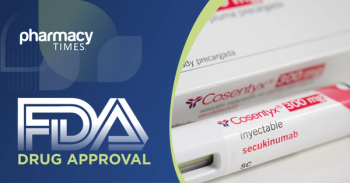
The FDA approved secukinumab for adults with polymyalgia rheumatica who respond inadequately to corticosteroids or cannot tolerate tapering, supported by improved sustained remission and reduced steroid exposure in REPLENISH.

Preserving patient access requires attention to the people, workflows, and financial structures behind the pharmacy counter, not just the number of open pharmacy locations.
Advertisement
Advertisement
Trending on Pharmacy Times
1
Giredestrant Plus Everolimus Wins FDA Approval in ESR1-Mutated Advanced Breast Cancer
2
FDA Grants Accelerated Approval to Neladalkib for Previously Treated ALK-Positive NSCLC
3
FDA Approves Secukinumab as First IL-17 Biologic for Polymyalgia Rheumatica
4
When Medicine Changes Faster Than Health Care: Preparing for a New Era
5