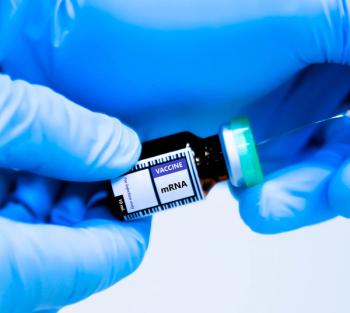
Each October, the pharmacy profession pauses to recognize technicians' decades-long evolution, from on-the-job trainees to nationally certified health care professionals.
Certifying pharmacy technicians to administer immunizations streamlines workflow, combats vaccine misinformation, and positions pharmacies to fill a coming gap in physician access.
In an interview with Pharmacy Times, Jennifer Griffin, PharmD, MS, a clinical pharmacist with Harps Food Stores, discussed the growing role of pharmacies in immunization delivery and the importance of certifying pharmacy technicians to administer vaccines. Griffin identified misinformation as one of the most pressing challenges pharmacists face and emphasized the importance of listening to patients’ concerns without judgment or persuasion. She noted that COVID-19 accelerated patient reliance on pharmacies for vaccination and that an anticipated physician shortage will further position pharmacies to meet future immunization and care needs. Griffin also outlined best practices for training and integrating certified technicians into daily workflow, stressing that consistent delegation—not just reliance during busy periods—is key to a sustainable, provider-level pharmacy practice.
Pharmacy Times: Can you please introduce yourself?
Jennifer Griffin, PharmD, MS: My name is Jennifer Griffin. I'm a clinical pharmacist with Harps Food Stores, and I'm super excited to be chatting today about immunizations and utilizing our pharmacy technicians when it comes to providing immunizations to patients.
Pharmacy Times: National Immunization Awareness Month serves as an annual reminder of the importance of vaccines across the lifespan. From your perspective, what is the most pressing immunization gap or challenge that pharmacists should be focused on right now?
Griffin: I feel like this is a challenge that we face around medicine in general, but that's misinformation—misinformation on the internet, news, social media, and the misinformation that can be spread just from person to person. As pharmacists, we're asked questions daily about something that a patient read in an article or heard from a family member regarding a medication or a vaccine, and what can sometimes seem like an odd concern to us as health care professionals can be genuinely anxiety-inducing to patients. I'm going to talk about this a little later on, but we should never dismiss a patient's concerns, even if they seem silly to us or we're tired of answering the same questions over and over, because when patients have these concerns, I see it as a privilege that I have in community pharmacy to be an easily accessible source of knowledge that patients trust to bring their concerns to. Every time we, as pharmacists, get to showcase our knowledge, we're proving the utility of community pharmacists and educating patients that we do so much more and know so much more than just how to put pills in a bottle. As our pharmacist scope of practice grows beyond dispensing medications, we're having to change how patients view their local pharmacy. We're more than just a place to pick up their medications. Now we provide vaccines, strep and flu testing, oral contraceptive prescribing, and so much more.
Pharmacy Times: Pharmacists have become one of the most accessible points of contact for vaccinations. Can you speak to how the pharmacist's role in immunization has evolved in recent years and what that expanded scope means for patient care?
Griffin: I can't talk about the pharmacist's role in providing immunizations without talking about COVID-19. And I don't know if you can still say "in recent years," since it was 6 years ago, but COVID-19 really jump-started patients going to their pharmacy to receive vaccines. It's now commonplace for this. Pharmacists truly showed their value in the community during that time, and with 90% of US citizens living within 5 miles of a community pharmacy, we were the only ones who could have filled that need. Our scope of practice continues to grow, and COVID-19 gave us a lot of momentum. We need to keep this momentum going to grow our scope even further. Pharmacists are going to have an opportunity in the coming years to have another big impact in the community, and I want to make sure I get this statistic right, but there was a report published by the Association of American Medical Colleges that brings to light what our health care system is going to be facing in the next decade. The report discussed how we have this large group of physicians—42%, to be specific—approaching retirement age in the next 10 years. And talking about demographics, we have a rapidly growing population of those 65 years and older, leading to more demand for health care services. So, with this upcoming shortage of access to care, who is going to be in the prime position to fill that need? It's going to be pharmacies.
Pharmacy Times: Vaccine hesitancy remains a significant barrier to immunization rates. What strategies or conversation approaches have you found most effective for pharmacists addressing hesitant or undecided patients?
Griffin: The approach that I like to take with these patients is just making sure that I'm hearing and listening to their concerns as to why they're hesitant or undecided. I want to make sure that I fully understand what they're thinking and how they're feeling before I respond. Listening to patients always goes such a long way when you're building rapport with them, and so when responding to patients who are vaccine-hesitant, I'm never trying to be persuasive one way or another. I simply want to provide the patient with facts regarding the concerns that they brought up with me, because they have a right to be well-informed before making a decision about what they feel is best for their health.
Pharmacy Times: We're seeing more states move toward certifying pharmacy technicians to administer immunizations. What has your experience been with getting techs immunization certified, and how does that certification change day-to-day workflow in the pharmacy?
Griffin: This is something that I am super passionate about—getting technicians certified and utilizing them in our pharmacy. In our pharmacies, we try to get as many of our technicians immunization certified as possible. It's not a long and complicated process to get a technician certified, and they're fully capable of doing this. The pharmacist still, of course, has to do their clinical part in verifying that the vaccine is appropriate and that we're administering the correct vaccine, but the workflow in the pharmacy is incredibly streamlined with the technician administering the vaccines. Honestly, it's now the norm for technicians to give vaccines in our pharmacies, and it's a rare occurrence when I do give a vaccine.
Pharmacy Times: For pharmacies considering expanding immunization services to include certified technicians, what advice would you give on training, oversight, and effectively integrating techs into that role?
Griffin: As with any training program, we want to make sure we're providing dedicated time to the technician to complete their immunization training, whether it be virtual or in person. And before the technician gives any immunizations to a real patient, they'll have given multiple vaccines—multiple saline injections—to a kind volunteer. We want the technician to be confident in their abilities, and we want to make sure that the supervising pharmacist is also confident in their technician to correctly administer vaccines. And then finally, and I think the most important, is that we want to provide support to the technicians in that role. Allow them to give immunizations regularly, not just on busy days when the pharmacist is occupied. Sometimes in a busy pharmacy, as pharmacists, we have the tendency to adopt the mindset of, "Oh, it'll just be easier or faster if I do it myself." But we have to move away from that. I've learned that if you take the time to invest in training your technicians well, and you hand over the nonclinical work to them, and you provide them with the support and the time to perform those tasks, they will succeed, and your days in the pharmacy will never be the same. You'll never want to go back to how things were before.
Pharmacy Times: Is there anything you would like to add?
Griffin: I want to reinforce that if there is any nonclinical task that you have not delegated to your technicians—things like data entry, product dispensing—please do so now. We have our technicians running MedSync programs and basically any nonclinical task, because that's going to transform your workflow. If we're talking about scope of practice, if we as pharmacists want to be providers, we have to act like providers, and that comes with utilizing our support staff appropriately.