About the Author
Mohammed Chammout, PharmD, BCMTMS, is a clinical access and reimbursement specialist who has worked with Optum Rx. He writes about GLP-1 therapeutics, specialty drug access, and pharmacy practice for Pharmacy Times.
On GLP-1s like semaglutide or tirzepatide, weight loss can mean muscle loss; encourage patients to use protein and resistance training to stay strong.
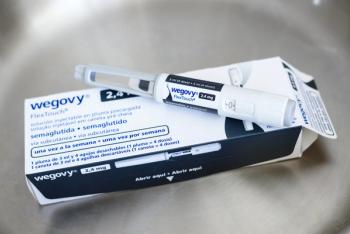
A patient came to my counter 6 months into her treatment journey with semaglutide (Wegovy; Novo Nordisk). She had lost 30 lb. She looked great. And she was upset.
"I feel weaker," she told me. "My arms look smaller. My trainer says I'm losing muscle. Is that the medication?"
She was right. And almost nobody had warned her.
The glucagon-like peptide-1 (GLP-1) conversation at the pharmacy counter has focused almost entirely on nausea, dose escalation, and insurance coverage. Those are real concerns. But the muscle loss question comes up after the patient’s initial excitement about weight loss, and it is the one most pharmacists are not equipped to answer.
Here is what the evidence shows, and what patients need to hear.
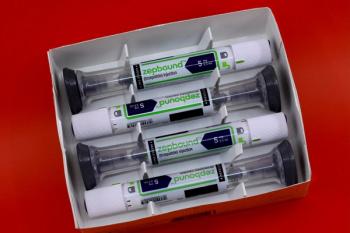
In the phase 3 STEP-1 trial (NCT03548935) of semaglutide 2.4 mg weekly, participants lost approximately 15% of their body weight over 68 weeks. Bone density scans showed lean mass decreased by roughly 13%, accounting for about 40% to 45% of total weight lost.1 In the phase 3 SURMOUNT-1 trial (NCT04184622) of tirzepatide (Zepbound, Mounjaro; Eli Lilly), average weight loss was around 21%, with lean mass loss representing approximately 25% of total weight lost—a somewhat more favorable ratio.1
Those numbers alarmed people when they surfaced, and understandably so. Losing 8 to 15 lb of lean mass alongside fat sounds like a serious clinical problem.
The context changes the picture. During any meaningful caloric deficit, whether from a low-calorie diet, bariatric surgery, or GLP-1 therapy, some lean mass loss occurs. This is not a GLP-1–specific effect. It is a physiological response to weight loss. What matters clinically is the ratio of fat lost to lean mass lost, the absolute amount of lean mass lost, and whether that loss affects functional strength.2
On that measure, GLP-1s do not look uniquely bad. The proportion of lean mass relative to total body weight improved slightly in STEP-1, meaning patients ended up with better overall body composition even as absolute lean mass declined. And tirzepatide's dual glucose-dependent insulinotropic polypeptide receptor activation appears to have some anabolic signaling properties that explain its modestly more favorable lean mass profile compared with semaglutide.2 The real concern is not the average patient. It is a specific subgroup.
Three patient populations deserve more careful muscle-loss counseling than most receive: older adults, those with low baseline muscle mass, and patients losing weight rapidly.
Age-related muscle loss is already a significant clinical problem in patients older than 65 years. A 2026 review found that GLP-1 use in older women with obesity warrants particular attention because lean mass loss from GLP-1 therapy may exacerbate preexisting sarcopenia and frailty.3 For a patient aged 70 years who is already losing muscle mass naturally, an additional 10 lb of lean mass loss is not a minor adverse effect. It is a functional capacity issue with real consequences for fall risk, independence, and quality of life.
Patients who are obese but sedentary often have less lean mass than their weight suggests. Losing a substantial proportion of what they have matters more than it would for a well-muscled patient losing the same amount.
Finally, the faster the weight loss, the higher the proportion of lean mass in the total weight lost. Patients who are eating very little—sometimes below 1000 calories per day because GLP-1s suppress appetite so effectively—are at higher risk of muscle loss than patients maintaining adequate protein intake.
This is the counseling conversation that is not happening consistently at the pharmacy counter, and it is straightforward. Protein intake is the single most modifiable variable. Study findings consistently show that high protein intake significantly reduces lean mass loss during GLP-1 therapy.2 The target is approximately 1.2 to 1.6 g of protein per kg of body weight per day higher than most patients are eating. For a 200-lb patient, that is 109 to 145 g of protein daily. On a suppressed GLP-1 appetite, hitting that target requires intentionality. Patients need to be specifically told that every meal needs a protein anchor, even when they are not hungry.
Resistance training is the other half of the equation. A prospective study of 200 adults on semaglutide or tirzepatide combined with protein-rich meals and resistance training showed substantial fat loss with minimal muscle decline, with only 0.6 to 1 kg of lean mass lost.4 Two to 3 sessions per week targeting major muscle groups is the standard recommendation. Patients do not need to become athletes. Rather, they need to do enough resistance work to signal to their body that the muscle is still needed.
The combination of protein and resistance training works. Research combining semaglutide with bimagrumab (Eli Lilly and Company), an investigational antimyostatin antibody, showed that 92.8% of weight lost was fat compared with 71.8% with semaglutide alone.4 That research is still experimental, but it validates the principle: Muscle preservation during GLP-1 therapy is achievable when the right interventions are in place.
Mohammed Chammout, PharmD, BCMTMS, is a clinical access and reimbursement specialist who has worked with Optum Rx. He writes about GLP-1 therapeutics, specialty drug access, and pharmacy practice for Pharmacy Times.
The muscle loss ratio is now a design consideration for new obesity drugs. Pemvidutide (Altimmune), a GLP-1/glucagon dual agonist that received FDA breakthrough therapy designation for metabolic dysfunction–associated steatohepatitis in January 2026, has a lean mass loss ratio of approximately half that seen with semaglutide—roughly 20% compared with 39%.5 The glucagon component promotes fat oxidation while having a relative sparing effect on muscle protein, which explains the better body composition profile.
For patients and prescribers paying attention, the evolving landscape of obesity pharmacotherapy is moving toward agents that not only produce more weight loss but also produce better quality weight loss with more fat and less lean mass.5 That distinction will matter more as these drugs are prescribed to older and more vulnerable populations.
My patient came to the counter with a real concern and a good question. The answer she needed was not complicated: Yes, some lean mass loss is real. No, it is not inevitable if she takes the right steps. Yes, her pharmacist should have told her this months ago.
Every patient starting therapy with a GLP-1 deserves 3 specific pieces of counseling before they leave the counter with their first fill: Set a daily protein target, start or maintain resistance training, and understand that preserving muscle is an active process, not something that happens automatically because the medication is working.
The weight loss is the headline. Muscle preservation is the work that makes weight loss worth keeping.
Stay informed on drug updates, treatment guidelines, and pharmacy practice trends—subscribe to Pharmacy Times for weekly clinical insights.
Subscribe