With changes in Medicaid eligibility looming, hospitals must plan now to keep patient care gaps at bay.
GoodRx CCO Laura Jensen discusses how e-commerce, GLP-1 demand, and a fragmented health care system are driving a new era of direct-to-patient, cash-based pharmacy access.
At the Asembia AXS2026 Summit, moderator Anjalee Khemlani, health care journalist, opened the session on transparency as a competitive advantage by noting that one of GoodRx's founders once told her the company's greatest success would be going out of business because that would mean that the pricing problems it set out to fix were actually solved. Nearly a decade later, the problems haven't been solved. If anything, they've multiplied.
"The health care industry is getting much more fragmented," Laura Jensen, chief commercial officer of GoodRx, explained during the session. "The process of really having insurance and having coverage has become super far apart, and we're seeing more and more patients shoulder the burden of their health care."
And that burden is measurable. According to CMS, out-of-pocket spending across the US grew approximately 5.9% to $556.6 billion in 2024, representing 11% of total national health expenditures.1
Although GoodRx’s original model of connecting patients with discounted generic drug pricing at retail remains core to what it does, but Jensen described a second revenue model that comes from e-commerce partnerships with pharmaceutical manufacturers.
"The real opportunity for e-commerce is to put a lot more control and accountability in the hands of pharmaceutical manufacturers," she explained. "These are their brands. They are effectively the seller of record." By working directly with manufacturers to create cash-pay programs and shorter, stronger supply chains, GoodRx can offer a separate commercial relationship that benefits both parties as manufacturers gain more agency over patient-facing pricing, and GoodRx earns revenue outside its traditional discount model.
Jensen drew an analogy to explain where the industry currently stands: "It reminds me of many years ago, when restaurants started to put their menus online, and we were psyched that you could see a menu as a PDF online—but you still had to pick up your phone, still had to get in your car, still had to pull your credit card out. That is such a departure from ordering something on DoorDash."
Pharmaceutical access, she argued, is still largely in the “PDF-menu” era.
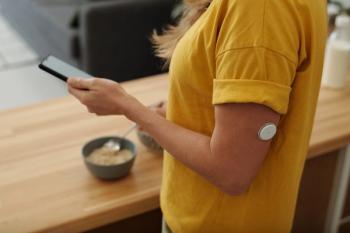
No conversation about pharmaceutical access in 2026 is complete without addressing glucagon-like peptide-1 (GLP-1) medications, which Jensen referred to as "the defining story of many of our careers," as well as a critical test case for what transparent, direct-to-patient pricing can accomplish.
GoodRx research has found that the number of people with no commercial insurance coverage for semaglutide (Wegovy; Novo Nordisk) increased approximately 42% from 2025 to 2026, leaving more than 41 million people without coverage. Furthermore, 88% of those who do have coverage face restrictions such as prior authorization requirements.2 Jensen acknowledges that there is still progress to be made. "…they're still priced too high. The coverage isn't there; we can admit that."
One finding from GoodRx's platform showed that roughly 7 in 10 patients seeking GLP-1 medications still choose to fill their prescriptions at a retail pharmacy rather than through mail order or home delivery. That behavior, Jensen suggested, underscores both the continued importance of the retail pharmacy relationship and the platform's ability to connect patients to pricing they can actually use at the counter.
The emergence of oral GLP-1 formulations specifically the semaglutide pill (Wegovy; Novo Nordisk) has added another dimension. Jensen noted that early data suggests pill volume is incremental, meaning patients are not simply switching from injectables. She also noted that launches go significantly better "when there is a real focus on reducing friction to zero [to make] it very, very easy for someone to obtain the pricing and take it to their pharmacy with minimal attestations."
The competitive dynamics between Eli Lilly's tirzepatide products (Zepbound, Mounjaro) and Novo Nordisk's semaglutide (Wegovy, Ozempic) offerings also surfaced. Early data comparing the rollout of oral semaglutide against tirzepatide prompted a discussion about brand loyalty.
"Brand matters a lot more than we originally thought," Jensen observed. "Thinking about how you can create the most simplicity with the strongest brand presence, with the best price possible—it's basic consumer stuff."
The session also touched on the shift in the patient-provider dynamic. Khemlani noted, "Before, you used to be able to tell patients about their health care. Now patients are saying, ‘I'm telling you.’" Jensen agreed, noting that with GLP-1s in particular, patients drove the demand conversation in a way that was unprecedented.
Khemlani added that in a recent conversation, the chief technology officer of CVS Health told her plainly that "the US health care system is broken beyond repair." The implication is that incremental reform of existing structures may not be enough and that consumer-driven, cash-pay models may represent a more viable path forward.
In response, Jensen said, "Consumerism in health care is advocacy. Creating great experiences for patients is advocacy."
Looking forward, Jensen argued that one of GoodRx's key competitive advantages is its ability to offer an alternative that does not require employers to make an all-or-nothing decision about coverage. Many GLP-1 medications for example, she said, will not make it onto employer formularies at current prices. But a cash-pay program that delivers transparent pricing through GoodRx's existing pharmacy infrastructure could serve as a complement, not a replacement.
"We don't have to force employers to make binary decisions. That is a huge competitive advantage," she said. "If this works here, where else can it work?"
Looking forward, Jensen said, "For those of us who have deep-rooted experience in health care, we've really got to show up in a very principled way—and say we know we were part of the problem. We've learned a lot, and now we need to be part of helping a new generation."