A high-dose vaccine cut hospitalizations for flu, pneumonia, and cardiorespiratory disease in older adults with asthma, COPD, and other chronic lung conditions.
Morning appointments don't appear to offer any immunologic edge over afternoon ones, new data from more than 15 million patients suggest.
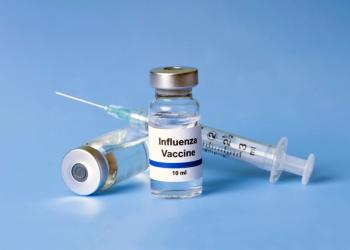
Pharmacists fielding questions about the “best” time to schedule a flu shot now have a large, real-world answer: it likely doesn't matter. A cross-sectional study published in JAMA Network Open found that the time of day at which a patient receives an influenza vaccine has no clinically meaningful effect on vaccine protection.1
The idea that time of day could influence vaccine performance isn't new. Circadian rhythms modulate immune function, and several small studies have shown that antibody responses vary depending on whether vaccination occurs in the morning or afternoon, with morning dosing sometimes associated with a stronger humoral response. A post hoc analysis of the phase 2 DANFLU-1 randomized trial (NCT05048589) went a step further, suggesting that earlier-in-the-day vaccination might be linked to fewer respiratory hospitalizations among older adults receiving the high-dose quadrivalent vaccine. Separately, research on pediatric populations has shown that timing within the season, rather than time of day, can meaningfully shift vaccine effectiveness. Until now, however, no study had tested the time-of-day hypothesis using clinical outcomes at scale.1-4
Researchers Karen K. Wong, MD, MPH, of Epic Systems; and Anupam B. Jena, MD, PhD, of Harvard Medical School, used deidentified electronic health record data from Cosmos, a network spanning more than 300 health systems. The analysis included adults 18 years and older who received a single dose of influenza vaccine between 7 AM and 5 PM during 1 of 3 seasons spanning August 2023 through January 2026. In total, the cohort captured more than 23 million vaccinations administered to nearly 15.9 million individuals.1
To sidestep an obvious confounder—that individuals who happen to book morning vs afternoon appointments might differ in underlying flu risk—the investigators ran a within-person analysis. Restricting to more than 5.4 million patients vaccinated in at least 2 of the 3 seasons, they compared the same individual's outcomes when vaccinated at different hours across different years, controlling for age and person-level fixed effects. This approach helps account for stable characteristics, such as chronic conditions, that could otherwise bias the results.1
Vaccination volume peaked between 8 AM and 10 AM, with a smaller second peak between noon and 2 PM. In the unadjusted analysis, the hour of vaccination showed a statistically significant association with subsequent influenza diagnosis, but the investigators emphasized that the differences across hours were not systematically split along a morning-vs-afternoon pattern and were too small to be clinically relevant. Hour of vaccination showed no significant association with influenza-related hospitalization risk.1
In other words, although the biological plausibility of a circadian effect on immune response remains supported by mechanistic and small-cohort data, that effect does not appear to translate into a real-world difference in whether patients ultimately get sick with flu.1,4
For pharmacists, the takeaway is largely reassuring, suggesting that there is no evidence-based reason to steer patients toward morning appointments or to worry that an afternoon or evening walk-in vaccination is inferior. That matters operationally, since pharmacy-based immunization scheduling already has to balance patient convenience, walk-in volume, and staffing, especially as more community pharmacies serve as the primary access point for seasonal vaccination.
The findings arrive against a backdrop of a 2025-2026 flu season with lower-than-usual vaccine effectiveness, driven largely by a drifted influenza A(H3N2) subclade circulating this year; interim CDC estimates place vaccine effectiveness against medically attended illness in a more modest range than in recent seasons. Against that context, the study authors of the JAMA Network Open study suggest that clinical effort is better spent maximizing vaccine uptake and matching antigenic strains than optimizing appointment scheduling. As the study authors put it, the priority now shifts to understanding whether appointment time affects the likelihood that a patient shows up for vaccination at all, rather than how well the vaccine works once administered.1,5