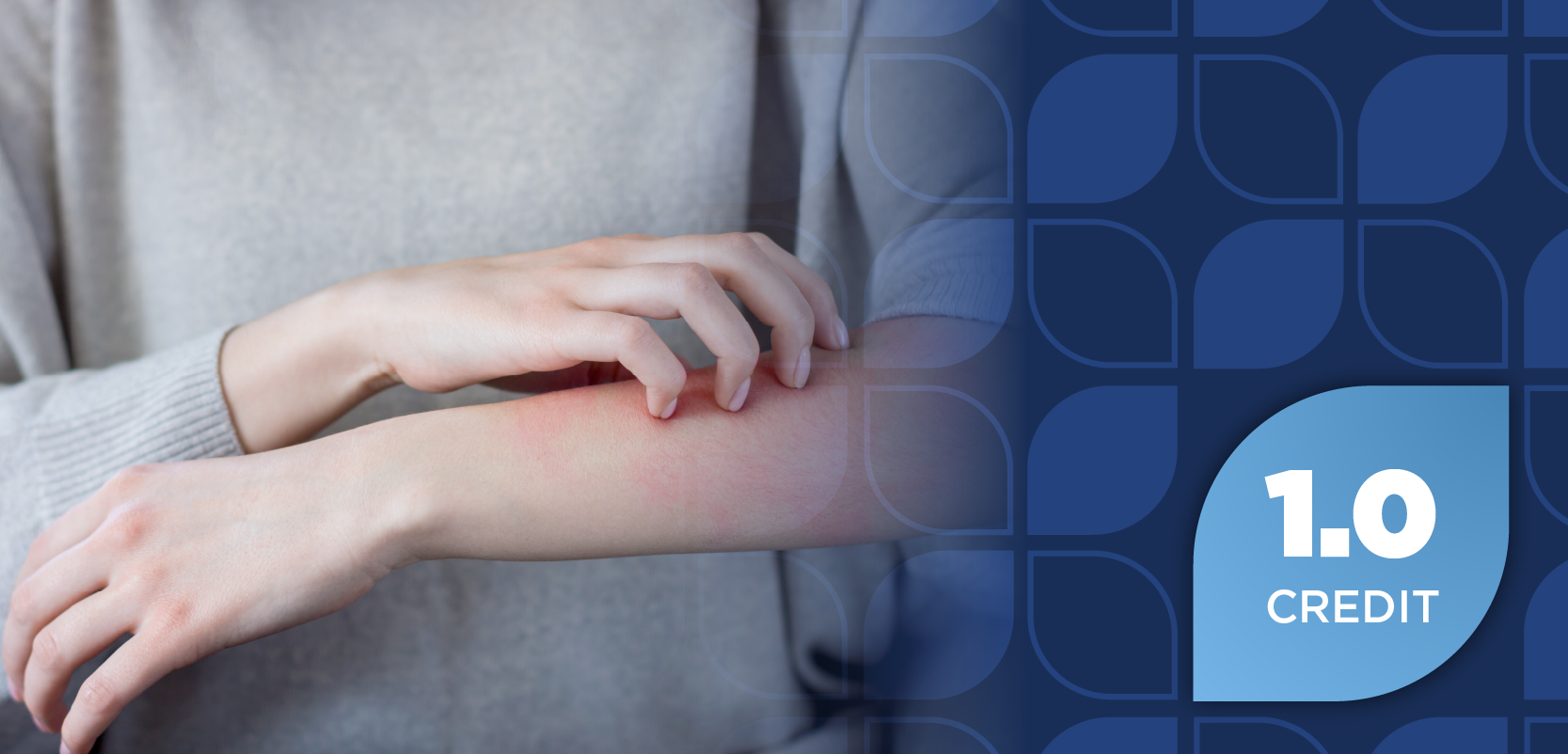
The skin, the body’s largest organ and one of its most complex, serves as the first line of defense against environmental threats. Comprised of multiple layers with diverse cellular and chemical components, it plays a critical role in protecting the body from external insults.1 Despite its importance, gaps in dermatologic knowledge and limited access to care persist, particularly in underserved communities. Expanding prevention-focused education is essential to addressing these disparities. Student pharmacists, as accessible and trusted health care trainees, are uniquely positioned to bridge this gap through community outreach and patient education initiatives.
Skin cancer remains the most commonly diagnosed cancer in the United States, with millions of cases treated each year.2 UV radiation is the primary modifiable risk factor, contributing to the vast majority of cases.3 Evidence-based preventive strategies, including consistent sunscreen use, protective clothing, and early recognition of suspicious skin changes, are critical in reducing the overall disease burden.4
Despite these opportunities for prevention, underserved populations experience disproportionately worse outcomes due to limited access to dermatologic care and lower baseline awareness of skin health practices.5 Addressing these gaps through community-based, pharmacist-supported education represents an important strategy to improve dermatologic health outcomes.
Background and Significance
Skin cancer is a significant public health concern, with millions of individuals treated annually and melanoma accounting for the majority of skin cancer–related deaths.6 Preventive behaviors, including consistent sunscreen use and sun protection practices, remain underused across the population.
Barriers to care are especially pronounced in underserved communities, where limited access to dermatology specialists, transportation challenges, and financial constraints contribute to delayed diagnosis and treatment.7 Misconceptions about skin cancer risk, particularly among individuals with darker skin tones, further contribute to reduced engagement in preventive behaviors.8
Community-based education has been shown to improve awareness, increase confidence, and promote adoption of sun protection behaviors.9 Pharmacists and student pharmacists are particularly well positioned to lead these efforts due to their accessibility and frequent patient interactions.10 Building on this need, this research focused on delivering practical, accessible education to improve skin health knowledge and behaviors in an underserved population.
Objective and Methods
The purpose of this research was to evaluate and assess the impact of pharmacist- and student pharmacist-led dermatological educational sessions on skin health knowledge, confidence, and sun protection self-care behaviors in an underserved population.
Participants reported baseline knowledge, confidence, and behaviors through a brief preeducation session survey. The online Table lists themes and survey domains with representative questions used in the pre- and posteducation sessions. The education session emphasized practical strategies that participants could immediately incorporate into their daily routines.
Educational content was reinforced with a pharmacist-developed brochure that included step-by-step guidance on proper sunscreen use, recognition of common skin conditions, instructions for monthly skin self-examinations, and recommendations for affordable OTC products. The session aligned with American Academy of Dermatology (AAD) recommendations, including the use of broad-spectrum sunscreen (sun protection factor ≥ 30), regular reapplication, and additional protective measures such as seeking shade and wearing protective clothing.4
Results
Participants reported substantial improvements in confidence, knowledge, and intended skin health behaviors following the educational session. Confidence in understanding basic skin care increased markedly, with more than half of participants reporting high confidence after the session compared with minimal baseline confidence (online Figure 1). Participants also indicated a shift toward proactive self-care, including plans to initiate or modify their skin care routines. Sunscreen use improved as participants reported a stronger commitment to regular use and a better understanding of proper application techniques (online Figure 2). Postintervention responses reflect participants’ intended behavior change based on self-reported survey data. Additionally, confidence in recognizing potential warning signs of skin cancer improved significantly, with most participants reporting moderate to high confidence following the educational session compared with predominantly low confidence at baseline (online Figure 3).
This research produced meaningful improvements in both confidence and intended skin health behaviors following the educational session. Overall, participants reported increased knowledge, improved confidence, and greater motivation to engage in preventive skin health behaviors.
Discussion
This study demonstrates that pharmacist- and student pharmacist–led education can significantly improve dermatologic literacy and preventive behaviors in underserved populations.
These findings are consistent with those of previous studies showing that community-based interventions improve awareness and confidence in skin cancer prevention.11 Results from a similar study reported increased knowledge and self-screening confidence following educational interventions in underserved populations.12-14
Barriers such as limited access to dermatologic care and socioeconomic constraints contribute to disparities in outcomes.5 Pharmacist-led interventions can mitigate these disparities by delivering accessible, evidence-based education at the community level.
About the Authors
Chenita W. Carter, PharmD, MS, is an associate professor of pharmacy and division director at Florida Agricultural and Mechanical (A&M) University College of Pharmacy and Pharmaceutical Sciences, Institute of Public Health, at the Durell Peaden Jr. Rural Pharmacy Education Campus.
Margareth Larose-Pierre, PharmD, is founding campus dean and professor of pharmacy practice at Florida A&M University College of Pharmacy and Pharmaceutical Sciences, Institute of Public Health, at the Durell Peaden Jr. Rural Pharmacy Education Campus.
Calvin Bass, Grant Foss, Camille Reed, and Phillip Murph Jr are fourth-year PharmD candidates at Florida A&M University College of Pharmacy and Pharmaceutical Sciences, Institute of Public Health.
The brochure used in this intervention reinforced key messages, including proper sunscreen application, monthly skin self-examinations, and recognition of concerning lesions. These tools support sustained behavior change and patient empowerment.
Practical Applications for Pharmacy Practice
Pharmacists can integrate skin health education into community pharmacy counseling, ambulatory care visits, free clinic outreach events, and more. Key interventions include counseling on AAD sunscreen guidelines, assisting with OTC product selection, promoting monthly skin self-examinations, and identifying concerning lesions and referring patients.
A key strength of this study is its emphasis on practical, patient-centered education that can be readily applied across a variety of pharmacy and community settings. Incorporating student pharmacists also demonstrates a sustainable approach to expanding preventive care outreach and increasing access to dermatologic education in underserved populations. Limitations include the small sample size, single-site implementation, and lack of long-term follow-up. Future efforts should focus on evaluating sustained behavior changes and expanding outreach to larger, more diverse populations.
Pharmacist-led dermatologic education can meaningfully enhance patient knowledge, confidence, and engagement in preventive skin health behaviors within underserved communities. Expanding these educational efforts across pharmacy practice settings offers a scalable opportunity to promote early detection, improve outcomes, and reduce disparities in dermatologic care.
REFERENCES
1. Bouwstra JA, Nădăban A, Bras W, McCabe C, Bunge A, Gooris GS. The skin barrier: an extraordinary interface with an exceptional lipid organization. Prog Lipid Res. 2023;92:101252. doi:10.1016/j.plipres.2023.101252
5. Asare EA. Disparities in melanoma and other high-risk skin cancers in the United States: elders, minorities, and rural populations. Surg Clin North Am. 2025;105(3):543-554. doi:10.1016/j.suc.2024.11.008
7. Kizy SM, Naqvi F, Maya T, et al. Increasing access to dermatology care for underserved populations: a literature review of existing care models. ARC J Dermatol. 2025;8(5):26-41. doi:10.20431/2456-0022.0805004
8. Jacobsen AA, Galvan A, Lachapelle CC, Wohl CB, Kirsner RS, Strasswimmer J. Defining the need for skin cancer prevention education in uninsured, minority, and immigrant communities. JAMA Dermatol. 2016;152(12):1342-1347. doi:10.1001/jamadermatol.2016.3156
9. Sandhu PK, Elder R, Patel M, et al; Community Preventive Services Task Force. Community-wide interventions to prevent skin cancer: two community guide systematic reviews. Am J Prev Med. 2016;51(4):531-539. doi:10.1016/j.amepre.2016.03.020
10. Tucker R, Duffy J. The role of community pharmacists in the management of skin problems. J Pharm Care Health Syst. 2014;1(1). doi:10.4172/2376-0419.1000105
11. Lovasz D, Kan B, Martin EA, et al. Beyond the surface: a collaborative effort for free skin cancer screenings in an underserved community. BMC Public Health. 2026;26(1):1470. doi:10.1186/s12889-026-27117-6
12. Castillo Valladares HB, Lee AK, Cheraghlou S, Zhou A, Ramachandran S. A pilot study examining skin cancer education in an underserved population at a free skin cancer screening. Int J Womens Dermatol. 2020;7(2):184-186. doi:10.1016/j.ijwd.2020.06.007
13. Roberson L, Ugwu-Dike P, Stevenson PA, Collier SM. Geographic access to dermatologic care in urban underserved communities. J Am Acad Dermatol. 2024;90(2):410-412. doi:10.1016/j.jaad.2023.09.079
14. Taha S, Khalaf L, Issa D, et al. The role of pharmacists in dermatology: a cross-sectional evaluation of the educational needs, knowledge, and practices of community pharmacists regarding the use of topical medications in chronic dermatological diseases. BMC Health Serv Res. 2025;25(1):1419. doi:10.1186/s12913-025-13599-4