





Hematology
Latest News
Advertisement
Latest Videos






CME Content



















Advertisement
More News

OPN-6602 is an oral EP300/CBP bromodomain inhibitor that yielded 100% tumor regression as a combination therapy in mouse models.

Andrew Lin, PharmD, BCOP, discusses his pharmacist-led study examining the association between early tacrolimus levels and outcomes post-allogeneic hematopoietic cell transplantation.

Diversity in clinical trials remains important to ensure research data for therapies accurately reflects the diverse patient populations who will use them globally.

The approval follows the ECHELON-3 study, which enrolled adults with relapsed or refractory large B-cell lymphoma.

Molly Schiffer, PharmD, BCOP, discusses the logistical, operational, and financial challenges of delivering cellular therapies in the outpatient setting, focusing on CAR T-cell therapy, TIL therapies, and emerging trends in non-oncology applications.
The approval marks a significant milestone in the treatment of a rare and aggressive subtype of acute leukemia.

Circulating lactate is increased in patients with myelofibrosis and corresponds with the remodeling of lactate export channel monocarboxylate transporter 4, suggesting a link with fibrosis establishment.

J Ryan Shaw, PharmD, BCPS, BCOP, CPP, discusses the value of the ASTCT and CIBMTR Tandem Meeting 2025 as a platform for multidisciplinary collaboration, cutting-edge education, and advancing pharmacy practice in transplant and cellular therapy.

Zahra Mahmoudjafari, PharmD, BCOP, FHOPA, discusses the logistical challenges and interprofessional strategies essential for delivering cellular therapies in outpatient settings, emphasizing the pharmacist's role in improving patient outcomes and addressing health disparities.

Molly Schiffer, PharmD, BCOP, discusses the logistical and operational challenges of delivering outpatient CAR T-cell therapy, emphasizing the benefits of outpatient treatment, including reduced costs, improved access to therapy, and better quality of life for patients.

Catriona Jamieson, MD, PhD, discusses the role of stress-activated base editors like ADAR1p150 and APOBEC enzymes in cancer progression and highlights innovative approaches to halt these processes and improve therapeutic outcomes.

The quadruple treatment was active and safe as initial therapy for older patients with transplant-ineligible multiple myeloma.

γδ T cells are emerging as a transformative immunotherapy approach in oncology, offering unique mechanisms for targeting hematologic and solid tumors, with clinical trials demonstrating promising survival outcomes and durable immune responses.

Expert weighs in on data from the AQUILA trial and Johnson & Johnson's approval request for daratumumab for smoldering multiple myeloma.

Myelofibrosis patients with CALR mutations have lower responses to symptoms and higher rates of anemia after 6 months of therapy with ruxolitinib.

Diagnosing anemia, a serious and common complication of patients with myelofibrosis, could be made easier with the use of red cell distribution width assessment.
Leukemia biology may predict patterns of blinatumomab failure after initial response.

Data indicates fedratinib’s role as an effective second-line treatment in patients with myelofibrosis who have been previously treated with a JAK inhibitor, such as ruxolitinib, though more research is necessary.

Isatuximab is a CD38-targeting monoclonal antibody that has demonstrated significant clinical success in improving minimal residual disease rates and progression-free survival.

Axatilimab-csfr is a colony-stimulating factor-1 receptor (CSFR1) blocking monoclonal antibody indicated for cGVHD after 2 or more lines of prior therapy in adults and pediatric patients that weigh at least 40 kg.

Patients with myelofibrosis have a higher likelihood of having a cardiovascular risk factor when compared with essential thrombocythemia or polycythemia vera.
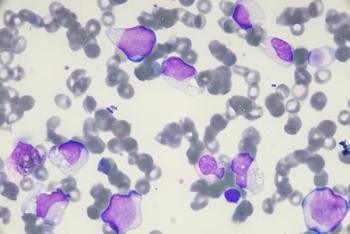
The FDA approved treosulfan, in combination with fludarabine, for patients 1 year of age and older with acute myeloid leukemia (AML) or myelodysplastic syndrome (MDS).
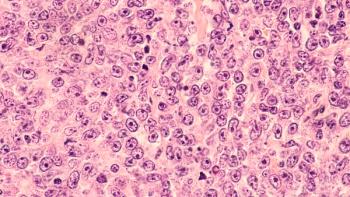
A phase 2 trial investigates MRD detection and therapy advancements.

The international cohort study evaluated the safety, efficacy of BCMA-targeting agents ciltacabtagene autoleucel and idecabtagene vicleucel.
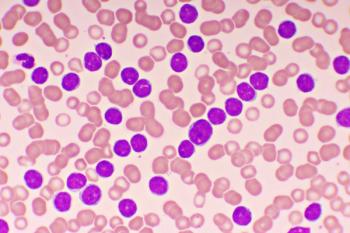
Investigators assessed fixed-duration venetoclax plus acalabrutinib with or without obinutuzumab vs chemoimmunotherapy.
Advertisement
Advertisement
Trending on Pharmacy Times
1
Nipah Outbreak in India Poses Low Global Risk Despite Lack of Approved Treatments
2
TrumpRx Launches, Offering Cash-Paying Patients Discounted Drugs
3
Q&A: Making Plant-Based Eating Practical in Pharmacy-Led Cardiometabolic Care
4
Pharmacist Takeover: CAR T Therapy Signals a Shift in ALL Treatment
5