

Conference Coverage
Latest News

Jun 04, 2026 | News
Subcutaneous Isatuximab On-Body Injector Shows High Reliability, Favorable Safety Across Multiple Myeloma Trials

Iberdomide-Based Quadruplet Induction Followed by Maintenance Achieves High Response and MRD Negativity in NDMM
Jun 04, 2026

Teclistamab Monotherapy Demonstrates Significant Survival and Response Benefits Versus Standard Regimens in RRMM
Jun 04, 2026

The Peptide Reclassification Everyone's Talking About: A Pharmacist's Take on What RFK Jr's Announcement Actually Means
Jun 04, 2026

Collaboration, Innovation, Stewardship, and the Future of Infectious Diseases Pharmacotherapy and Practice
Jun 04, 2026



Advertisement
Shorts

0:33
ePROs Help Reduce Hospitalizations and Improve Cancer Care
19 hours ago
by
Debra Patt, MD, PhD, MBA(+1 more)

1:03
Why Real-World Data Is Critical to Understanding GLP-1s and Cancer Outcomes at ASCO 2026
2 days ago
by
Jessica Paulus, ScD(+1 more)

0:39
APP-Led Scheduling Model Cuts Time to First Oncology Visit by Nearly 50%
3 days ago
by
Eileen Vella, MS, PA-C(+1 more)
0:22
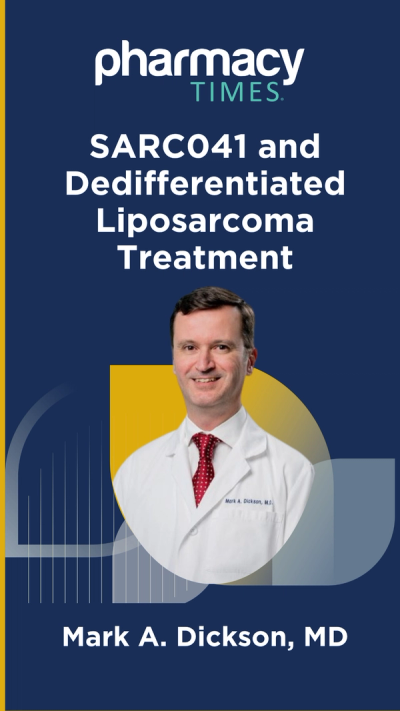
SARC041 and the Future of Dedifferentiated Liposarcoma Treatment
5 days ago
1:07
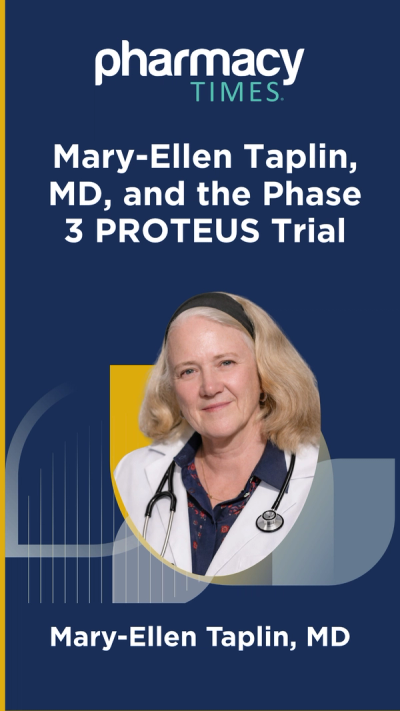
Mary-Ellen Taplin, MD, and the Phase 3 PROTEUS Trial
5 days ago

0:38
Tackling Polypharmacy and Access Barriers After a Stroke
6 days ago
by
Aislinn Antrim, Associate Editorial Director(+1 more)

0:57
Pharmacists as a Constant in Stroke Recovery
7 days ago
by
Aislinn Antrim, Associate Editorial Director(+1 more)

0:53
Bridging the Gap After Hospital Discharge
8 days ago
by
Aislinn Antrim, Associate Editorial Director(+1 more)

1:04
Triptorelin: GnRH Agonist With Flexible Dosing for Prostate Cancer
9 days ago
by
Aislinn Antrim, Associate Editorial Director(+1 more)

0:33
Recurrent Strokes Are More Disabling
10 days ago
by
Katrina Mann, PharmD(+1 more)
Podcasts

Videos


Continuing Education













Advertisement
All News
Advertisement

The FDA granted Priority Review to the NDA for bezuclastinib plus sunitinib in previously treated advanced gastrointestinal stromal tumors (GIST).

Apnimed has submitted an NDA for AD109 for obstructive sleep apnea following positive phase 3 results from the SynAIRgy and LunAIRo trials.

A real-world study presented at ASCO 2026 found that early intravenous immunoglobulin administration within 4 weeks of starting talquetamab was associated with significantly lower infection rates and reduced 1-year mortality in patients with relapsed or refractory multiple myeloma.

Recent developments reflect a broader shift toward individualized, biologically informed care.

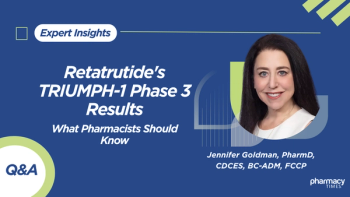
As retatrutide moves toward FDA submission, Jennifer Goldman, PharmD, breaks down the TRIUMPH-1 data—and what it means for patient selection, dose escalation counseling, and positioning within the antiobesity pipeline.

Updated results from a phase 1 study showed that KLN-1010 produced reduced MRD-negative responses in all treated patients with RRMM.

The FDA approved the oral antiviral ensitrelvir (Xocova; Shionogi & Co, Ltd) for post-exposure prophylaxis (PEP) of COVID‑19 in adults and adolescents 12 years and older.

Data presented at ASCO 2026 show giredestrant plus palbociclib extends PFS in ER+/HER2– metastatic breast cancer; FDA approval on the horizon.
ASCENT-04 updated data show sacituzumab govitecan plus pembrolizumab extends benefit past progression in PD-L1+ metastatic TNBC.
Advertisement

Final results from the CEPHEUS trial showed that daratumumab plus VRd produced deeper, more durable responses and prolonged survival.

Emerging evidence suggests that some individuals develop nutritional deficiencies during treatment, while others experience biologically driven GLP-1 resistance.
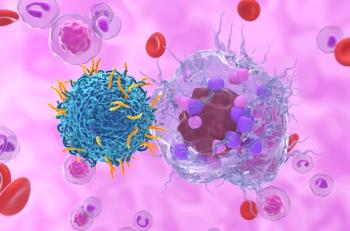
An RNA- and lipid nanoparticle–based platform derived from non-LTR transposons enables stable in vivo CAR T-cell engineering.

Disparities in education access and quality, income level, and race and ethnicity are SDoH that make a major impact on diabetes and its management in the US.

ASCO 2026: Daraxonrasib boosts survival and PFS in metastatic pancreatic cancer versus chemo, with better tolerability and quality-of-life preservation.

ASCO 2026 data show encorafenib plus cetuximab with FOLFIRI boosts response and PFS in BRAF V600E mCRC, complementing FOLFOX.

Findings presented at the 2026 Joint ASTCT + EBMT Basic and Translational Scientific Meeting offer potential therapeutic targets to reduce GI toxicity and GVHD.
With no new kidney-protective therapies approved in T1D for over three decades, experts break down the clinical significance of finerenone's FDA priority review and what pharmacists need to know.

Phase 3 SARC041 shows abemaciclib sharply extends progression-free survival in advanced dedifferentiated liposarcoma, hinting at a new standard.

The trial met both dual primary end points of pathologic complete response and metastasis-free survival.

ASCO 2026 GLORA tests lisaftoclax as an addition to BTK inhibitors to deepen responses and delay progression in high-risk CLL/SLL.

Seven-year CROWN trial update shows lorlatinib delivers durable progression-free survival and strong brain control in ALK-positive NSCLC.
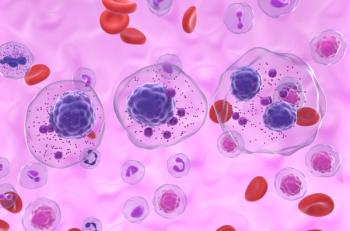
DREAMM-9 data show belantamab mafodotin in TI NDMM delivers high responses, with longer dosing improving eye safety and quality of life.
Advertisement
Advertisement
Trending on Pharmacy Times
1
The Peptide Reclassification Everyone's Talking About: A Pharmacist's Take on What RFK Jr's Announcement Actually Means
2
What Pharmacists Need to Know About Retatrutide's TRIUMPH-1 Phase 3 Results
3
Subcutaneous Isatuximab On-Body Injector Shows High Reliability, Favorable Safety Across Multiple Myeloma Trials
4
First-in-Human In Vivo CAR-T Therapy Shows Encouraging Activity in Relapsed/Refractory Multiple Myeloma
5