

Pharmacist Jennifer Goldman on why expectation-setting, GI counseling, and nutrition drive glucagon GLP-1 persistence and long-term success.
Pharmacist Jennifer Goldman on why expectation-setting, GI counseling, and nutrition drive glucagon GLP-1 persistence and long-term success.
McPhillips and James make the business case for at-home testing as a win-win for patients and pharmacies, and close with advice for pharmacists hesitant to add self-testing counseling to their workflow.

Zahra Mahmoudjafari, PharmD, BCOP, FHOPA, MBA, challenges the assumption that oral agents (belumosudil) are inherently more convenient than intravenous therapy (axatilimab) by highlighting that the intravenous schedule creates structured monitoring touchpoints and that mechanism differences—not route alone—should drive sequencing decisions in heavily pretreated populations.
Brooke Adams, PharmD, BCOP, walks through the operational mechanics of transitioning cGVHD patients to community settings: coordination touchpoints, common failure points, and 90-day post-transition checkpoints that confirm a successful handoff.
Zahra Mahmoudjafari, PharmD, BCOP, FHOPA, MBA, addresses the tension between objective NIH scoring and subjective patient experience, and how pharmacists can document patient-reported outcomes to support clinical recommendations, particularly when partial responses demonstrate meaningful functional improvement.
Brooke Adams, PharmD, BCOP, explores how patient narratives on axatilimab inform treatment decisions, moving beyond National Institutes of Health response criteria to functional outcomes—return to work or family activities, reduction in pain or skin discomfort, improved sleep—and how these improvements may exceed what clinical response rates alone predict.
Zahra Mahmoudjafari, PharmD, BCOP, FHOPA, MBA, describes the pharmacist-to-pharmacist handoff workflow when patients with cGVHD transition from the transplant center to outpatient or home infusion settings, including essential documentation elements, baseline assessments, and red-flag symptoms that require immediate clinical contact.
Brooke Adams, PharmD, BCOP, identifies the clinically meaningful adverse effects every pharmacist must monitor—periorbital edema, hepatic enzyme elevations, fatigue—and specifies intervention thresholds (grading, dose modifications, hold criteria) that should trigger escalation conversations with prescribers.
Zahra Mahmoudjafari, PharmD, BCOP, FHOPA, MBA, discusses how axatilimab performs in actual practice versus what AGAVE-201 predicted, including responses in organ manifestations not well-represented in the trial and how real-world monitoring protocols have evolved based on accumulated clinical experience.
Brooke Adams, PharmD, BCOP, walks through the axatilimab trial data (AGAVE-201) and belumosudil trial populations, highlighting how differences in study design, patient characteristics, and end points affect pharmacist interpretation and comparability, and what gaps exist in the evidence base for specific organ manifestations.
Zahra Mahmoudjafari, PharmD, BCOP, FHOPA, MBA, translates the CSF1R-targeted mechanism into practical pharmacist workflows: distinct toxicity profiles (periorbital edema, hepatic enzyme elevations), drug interaction review for polypharmacy, and how to communicate the mechanistic rationale to patients and community pharmacy teams.
Brook Adams, PharmD, BCOP, explains axatilimab's distinct mechanism targeting the CSF1R pathway on macrophages and monocytes—as opposed to T-cell pathways (ibrutinib) or JAK/STAT signaling (ruxolitinib)—and why this mechanistic differentiation is clinically meaningful when patients have already progressed on other agents.
Zahra Mahmoudjafari, PharmD, BCOP, FHOPA, MBA, discusses how axatilimab fits into formulary placement and treatment sequencing decisions at her institution, including how the multidisciplinary transplant team aligns on when to initiate therapy and whether clinical scenarios exist where the conversation might occur earlier than strictly third-line.

Led by the moderator, the panelists discussed the rationale for targeting the KIT D816V mutation with tyrosine kinase inhibitors and reviewed six-month and three-year PIONEER trial data showing sustained reductions in symptom burden and improved quality of life with avapritinib in indolent systemic mastocytosis, with minimal treatment discontinuation due to adverse events.
The panelists examined how treatment goals differ between indolent and advanced systemic mastocytosis (SM) — the former focused on symptom control and quality of life, the latter also targeting disease modification to reduce mast cell burden and organ damage — and outlined the pharmacist's role in acute anaphylaxis management, including patient education on epinephrine use and antihistamine dosing.
Brooke Adams, PharmD, BCOP, describes the clinical reality of third-line cGVHD: patients with relapsed or refractory disease after steroids, calcineurin inhibitors, and at least 1 approved second-line agent.
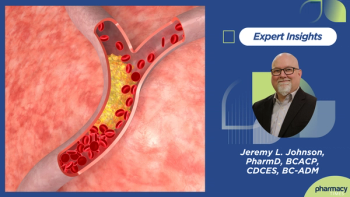
Older triglyceride drugs manage only 10% to 30% reductions; newer injectables go far further, with FCS as their first key role.

In the final episode, 'From Knowledge to Action: Final Takeaways for Oncology Pharmacists Implementing Bispecific Therapy,' the panelists explored the following critical question:

Before escalating therapy, Stacey M. Cutrell, PharmD, urges pharmacists to rule out pseudo-resistance and nonadherence driving stubborn blood pressure.

Finerenone, SGLT2s, and GLP-1s each target a different driver of CKD—pharmacists can tie every drug to a matching lifestyle change for adherence.

In this new show, host Megan Maroney, PharmD, BCPP, FAAPP, will examine therapies, trends, and clinical decisions shaping care for psychiatric conditions.
James and McPhillips share specific patient cases where at-home testing changed clinical outcomes — an undiagnosed colorectal cancer catch and a same-day COVID-to-Paxlovid intervention — before pivoting toward the business case for offering these services.

Jeremy Johnson, PharmD, on how oral and injectable proprotein convertase subtilisin/kexin type 9 (PCSK9) inhibitors are helping high-risk patients hit LDL targets statins alone can't reach.
Led by the moderator, the expert pharmacists examined the broad differential diagnosis for systemic mastocytosis (SM), including non-clonal mast cell activation syndrome, neuroendocrine tumors, myeloid neoplasms, and cutaneous mastocytosis, alongside the evolving landscape of KIT D816V mutation testing — from allele-specific PCR and digital droplet PCR to next-generation and Sanger sequencing — each with distinct sensitivity trade-offs.
Led by the moderator, the panelists discussed long-term complications such as osteoporosis, organ involvement, and recurrent anaphylaxis, along with common triggers including NSAIDs, opioids, alcohol, and physical exertion, highlighting symptom journaling as a practical tool for patient education.

Jennifer Griffin, PharmD, MS, outlines a listening-first approach to vaccine-hesitant patients and explains how delegating immunizations and non-clinical tasks to trained technicians has transformed her pharmacy's workflow.
In Outpatient Bispecific Initiation: Emerging Trends, Eligibility Criteria, and Operational Readiness, our panel of experts address a critical question.
In this episode, 'Sequencing in Focus: Pharmacists Reflect on the Impacts of MajesTEC-3 and MajesTEC-9 Data in Myeloma,' the oncology pharmacists explore the following questions:

Framing systemic inflammation as a “slow burn” helps patients see why SGLT2 inhibitors and GLP-1s work across diabetes, heart failure, and CKD.

Chronic kidney disease (CKD) in diabetes is often caught late. Standardized eGFR and UACR screening plus thoughtful sequencing can slow progression and cut CV risk.