

Cody Parsons, APh, PharmD, BCCCP, explains how the AHA's 40-hospital collaborative is mapping care gaps for patients with HFpEF and HFmrEF.
Cody Parsons, APh, PharmD, BCCCP, explains how the AHA's 40-hospital collaborative is mapping care gaps for patients with HFpEF and HFmrEF.
Without head-to-head trials, clinical data, payer requirements, and clinician comfort determine first-line regimen selection, while markers such as KEAP1 and STK11 prompt questions about adding a CTLA-4 inhibitor.
Pembrolizumab and cemiplimab dominate frontline practice, yet approval thresholds, histology-specific backbones, and formulations keep clinicians from treating PD-1 agents as fully interchangeable in the absence of head-to-head data.
Multidisciplinary institutional guidelines, more education and advocacy from pharmacists, national consensus guidance, and clinical trials that use the newer equations are needed in the hematology/oncology space.
The panelists recommend cross-comparing equations, deciding doses with the care team, and watching for patients at high risk of inaccurate estimates when moving chemotherapy dosing from Cockcroft-Gault to eGFR.
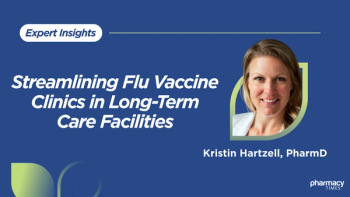
Kristen Hartzell, PharmD, explains that long-term care pharmacies can counter vaccine fatigue and raise influenza vaccination rates among older adults.
Moving from Cockcroft-Gault to race-agnostic estimated glomerular filtration rate (eGFR) for drug dosing is slowed by older trial data, inconsistent package inserts, gaps in education, and the work of updating EHR order sets.

C difficile survivor Caitlin McClain discusses the Peggy Lillis Foundation’s patient support and policy work, the need for new antibiotics and stronger stewardship, and the lasting psychological impact of the disease.

C difficile survivor Caitlin McClain describes how pharmacists helped secure her fidaxomicin supply and guide her recovery.
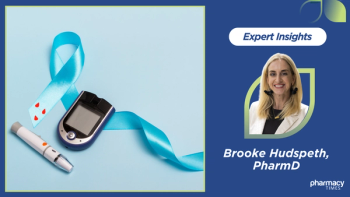
Brooke Hudspeth, PharmD, explains why community pharmacists, often the source of meters and supplies, are well positioned to guide new testers.
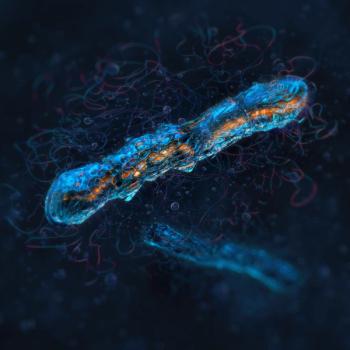
Caitlin McClain describes how months of unrecognized C difficile infection after antibiotic treatment led to septic shock, failed fecal transplants, and, eventually, a successful donor-directed fecal microbiota transplant.

Learn how chemotherapy, targeted therapy, and immunotherapy can strain the heart—key symptoms, high-risk drugs, and monitoring steps that protect patients.

Cystatin C is gaining ground in kidney guidelines and medication research, but a unified approach to using it in drug dosing has yet to emerge.
Creatinine's kinetic profile and nonrenal determinants can leave clinicians behind as kidney function declines or recovers in critically ill patients.
Christina O'Connor, PharmD, advises at least 2 g ceftriaxone every 24 hours and considering alternatives to ertapenem in select critically ill patients.

With AI handling manual calls and clinical notes, pharmacists and technicians can refocus on getting patients to care and keeping them on therapy.

At issue is whether faster clearance of unbound drug shortens free time above the minimum inhibitory concentration, a question with substantial literature and strong opinions on both sides.
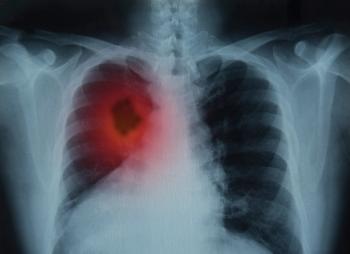
Sita Bhatt, PharmD, explains how new lung cancer therapies and oral oncology programs are expanding pharmacists’ roles in education, toxicity management, and access for underserved patients.

In part 3 of this interview, Michael Mina, MD, PhD, discusses VYD2311’s variant-resistant design and the role pharmacists may play in explaining emerging immunization options.
Jeff Goff, RPh, MS, walks through how UPMC has operationalized IV iron therapy from screening through infusion, and outlines how his team approaches hypophosphatemia monitoring and patient selection in light of the FDA's boxed warning.
Justin Arnall, Breanna Taylor, and Jeff Goff weigh in on hypophosphatemia risk across IV iron formulations, strategies for managing infusion reactions, and whether generic versus branded products affect reaction rates in practice.
Justin Arnall, Breanna Taylor, and Jeff Goff break down how dosing schedules, infusion chair time, and preparation complexity factor into product selection and infusion center capacity, and how pharmacists can help institutions deliver IV iron more efficiently.
Justin Arnall, Breanna Taylor, and Jeff Goff examine how step therapy, prior authorizations, and logistical hurdles delay IV iron treatment, and where pharmacists can intervene to secure overrides and streamline access for patients.
The panel discusses when cystatin C–based eGFR equations can improve kidney function estimates for drug dosing in older adults and patients with obesity, and why clinical judgment and follow-up remain essential.
The panel explains how to weigh safety and efficacy near kidney function dosing thresholds and how pharmacists can work with informatics teams to build BSA-adjusted estimated glomerular filtration rate (eGFR) into the electronic health record (EHR).

In an interview with Pharmacy Times, Victoria P. Werth, MD, discusses the 52-week AMETHYST findings for investigational litifilimab, meaningful improvement in cutaneous lupus, and the persistent symptoms that warrant specialist reassessment.

In an interview with Pharmacy Times, Ali A. Habib, MD, explains the mechanism of investigational cemdisiran and its every-12-week dosing schedule, highlighting pharmacists' responsibilities related to vaccination, infection-risk counseling, and potential use in generalized myasthenia gravis.
A panel of pharmacists explain how to bridge estimated creatinine clearance and the race-free CKD-EPI eGFR in dosing decisions while the field moves toward contemporary kidney function equations.
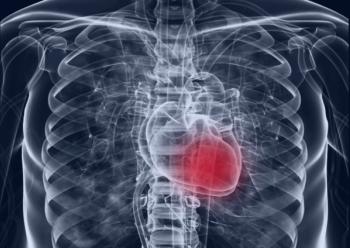
Heart failure with preserved ejection fraction (HFpEF) is often missed in primary care, and pharmacists can close care gaps by optimizing GDMT, including the nonsteroidal MRA finerenone.