

Katelyn O'Brien, PharmD, says a shared view of cardio-kidney-metabolic syndrome lets pharmacists unify care across endocrinology, cardiology, and nephrology.
Katelyn O'Brien, PharmD, says a shared view of cardio-kidney-metabolic syndrome lets pharmacists unify care across endocrinology, cardiology, and nephrology.

Kelsey Norman, PharmD, says pharmacists' longer visits and collaborative practice agreements make them well positioned to get patients to low-density lipoprotein (LDL) goals.

Anthony Ishak, PharmD, explains how the PREVENT risk estimator helps pharmacists calibrate dose intensity and move stage 2 patients to combination therapy.
The Cleveland Clinic team's real-world findings presented at ESC 2026 are hypothesis-generating and need prospective confirmation but point to a low threshold for OSA screening.
Publication, conference dissemination, and guideline inclusion are needed for uptake, which has historically been poor for chronic kidney disease (CKD) outcome sets.

Milind Desai, MD, MBA, explains the domino effect linking obesity, obstructive sleep apnea, and hypertrophic cardiomyopathy—and why treating obesity may break the chain.
A minimum agreed set of outcomes could let pharmacists compare chronic kidney disease (CKD) interventions head-to-head and cut the heterogeneity that has long muddied trials.
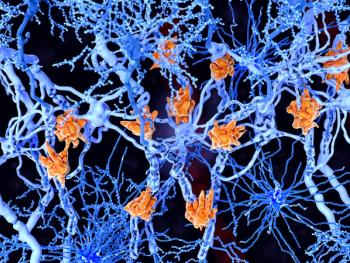
A clinical pharmacy specialist at UPMC Health Plan discusses how pharmacists help select disease-modifying therapies, address adherence barriers, and coordinate whole-person care for those with MS.
Glucagon-like peptide-1 (GLP-1) and GIP/GLP-1 agents are just the start: amylin- and glucagon-based mono-, dual-, and tri-therapies are on the horizon.
Pharmacists’ medication expertise can mitigate GI adverse effects and improve outcomes for patients beginning obesity pharmacotherapy

A Medicare GLP-1 bridge program marks 2026, while multiagonists like CagriSema are poised to lead the next wave of obesity therapy.
From statins after 70 to aspirin-free STEMI care, the pharmacist takeaway across 13 trials: identify disease earlier, treat precisely, deliver reliably.
Pharmacist Jennifer Goldman on why expectation-setting, GI counseling, and nutrition drive glucagon GLP-1 persistence and long-term success.
Craig Beavers, PharmD, breaks down CARDIO-TTRansform, SINGLE-AF, and POET II—and what each means for anticoagulation, stewardship, and monitoring.
Older triglyceride drugs manage only 10% to 30% reductions; newer injectables go far further, with FCS as their first key role.

Certifying pharmacy technicians to administer immunizations streamlines workflow, combats vaccine misinformation, and positions pharmacies to fill a coming gap in physician access.

Before escalating therapy, Stacey M. Cutrell, PharmD, urges pharmacists to rule out pseudo-resistance and nonadherence driving stubborn blood pressure.

Finerenone, SGLT2s, and GLP-1s each target a different driver of CKD—pharmacists can tie every drug to a matching lifestyle change for adherence.
Jeremy Johnson, PharmD, on how oral and injectable proprotein convertase subtilisin/kexin type 9 (PCSK9) inhibitors are helping high-risk patients hit LDL targets statins alone can't reach.
Jennifer Griffin, PharmD, MS, outlines a listening-first approach to vaccine-hesitant patients and explains how delegating immunizations and non-clinical tasks to trained technicians has transformed her pharmacy's workflow.

Framing systemic inflammation as a “slow burn” helps patients see why SGLT2 inhibitors and GLP-1s work across diabetes, heart failure, and CKD.

Chronic kidney disease (CKD) in diabetes is often caught late. Standardized eGFR and UACR screening plus thoughtful sequencing can slow progression and cut CV risk.
From dietitian referrals to setting realistic weight-loss expectations, Cornell maps the pharmacist's place on the MASLD team.
UNC Health's Stacey Cutrell breaks down the PREVENT calculator, secondary-cause screening, and special-population guidance for pharmacists.
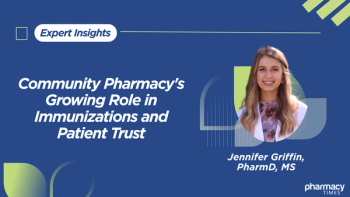
Jennifer Griffin, PharmD, MS, discusses how pharmacists' accessibility and trust position them to fight vaccine misinformation and help close a coming gap in health care access as physician shortages loom.

Andrew Bzowyckyj, PharmD, explains how the CKM framework turns albuminuria, ejection fraction, and inflammation into patient-specific risk stratification.
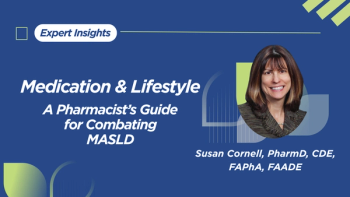
From double-dipping GLP-1s to off-label pioglitazone, Susan Cornell, PharmD, breaks down where the metabolic dysfunction-associated steatotic liver disease (MASLD) drug evidence stands today.
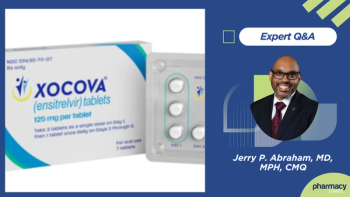
Jerry P. Abraham, MD, MPH, CMQ, discusses the persistent risks of COVID-19 and how a newly approved postexposure prophylaxis option is reshaping pharmacists' role in prevention.

Jessica Lewis-Gonzalez, PharmD, BCOP, discusses how pharmacists can layer mediator-symptom management with cytoreductive or targeted therapy in systemic mastocytosis (SM) and interdisciplinary communication.
Craig Beavers, PharmD, discusses a new American College of Cardiology expert consensus decision pathway that shifts HFpEF management from ejection fraction alone toward phenotype-driven diagnosis and treatment.