

Oncology pharmacy evolves rapidly, emphasizing the need for pharmacists to stay informed and reflect on personal growth for better patient care.
Oncology pharmacy evolves rapidly, emphasizing the need for pharmacists to stay informed and reflect on personal growth for better patient care.

New findings suggest omitting radiation therapy in postmastectomy breast cancer treatment enhances survival, emphasizing the role of systemic therapies.
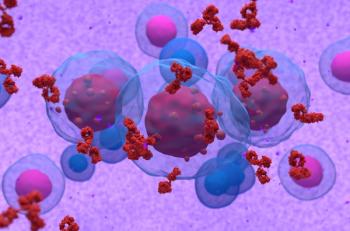
The FDA approves daratumumab and hyaluronidase for high-risk smoldering multiple myeloma, significantly improving patient outcomes and progression-free survival.
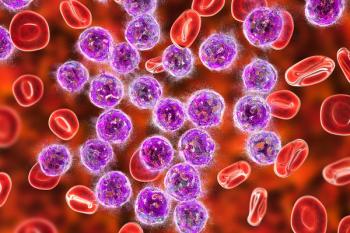
Leukogene's M2T-CD33 gains FDA orphan drug status, promising a novel immunotherapy approach for acute myeloid leukemia treatment.

Gedatolisib shows promise in enhancing progression-free survival for HR+/HER2– breast cancer patients resistant to standard therapies, as revealed in ESMO 2025.
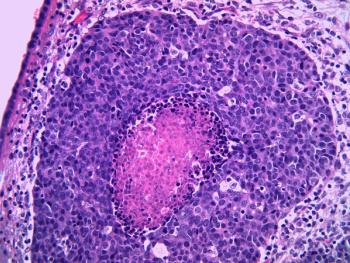
Enfortumab vedotin-ejfv has transformed treatment in locally advanced and metastatic urothelial carcinoma from decades-long platinum-based chemotherapy to the new standard of care combination of antibody-drug conjugate and PD-1/PD-L1 inhibitor.

Although further data will be presented in 2026, lifileucel shows promise as a 1-time treatment for advanced non–small cell lung cancer (NSCLC).

CAR-T and BsAb therapies revolutionize multiple myeloma treatment but pose infection risks, necessitating vigilant monitoring and tailored prevention strategies.
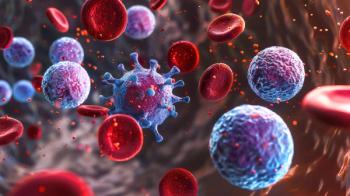
RSV infections in multiple myeloma patients delay treatment but do not increase mortality, highlighting the need for further research on infection management.

A retrospective chart review demonstrates the safety of using monoclonal antibodies that are produced with Chinese hamster ovary cells in patients with an allergy to alpha gal.

Researchers explore HER3-targeted therapy with patritumab deruxtecan to enhance outcomes in early-stage triple-negative breast cancer, reducing chemotherapy side effects.

Research reveals a notable risk of invasive fungal infections in multiple myeloma patients undergoing BCMA-targeted CAR T-cell therapy, highlighting the need for vigilant monitoring.

New strategies target dormant tumor cells in breast cancer, offering hope for preventing recurrence and transforming patient management.

FDA accelerated approval speeds access but faces challenges with trial completion, costs, and end point validation.

As cellular and bispecific immunotherapies move into earlier treatment lines, pharmacists are interpreting new guidelines, managing toxicities, and shaping patient care strategies.

COVID-19 mRNA vaccines enhance immune checkpoint inhibitor effectiveness in cancer therapy, significantly improving survival rates for patients with advanced tumors.

Data from multiple KEYNOTE clinical trials support the sustained survival benefits of pembrolizumab in non–small cell lung cancer (NSCLC).

Recent research reveals rising cancer rates among younger and older adults, linking obesity to increased incidence.

Oncologists increasingly embrace cell and gene therapies, yet barriers like cost and perceptions of risk hinder broader adoption.

A phase 2 trial suggests a stepwise regimen using liposomal irinotecan followed by oxaliplatin may improve progression-free survival over standard treatment.
Revumenib was approved for adults and pediatric patients 1 year and older with relapsed or refractory acute myeloid leukemia.
FDA approves belantamab mafodotin-blmf for relapsed or refractory multiple myeloma, enhancing treatment options and survival rates for patients with limited therapies.

New research highlights the enhanced humoral response in lymphoma survivors receiving two doses of the PCV20 vaccine, emphasizing vaccination's critical role in infection prevention.

When administering T-cell–modifying therapies, infections during and after treatment are a serious and pertinent risk.
Chronic graft-vs-host disease (cGVHD) is the leading cause of late, non-relapse mortality for patients who have undergone an allogeneic hematopoietic stem cell transplant. Axatilimab, which has durable responses and an attractive safety profile, offers a novel mechanism of action for the treatment for patients who have not succeeded with at least 2 prior lines of systemic therapy.

A recent study reveals imlunestrant plus abemaciclib shows superior efficacy over fulvestrant plus abemaciclib in treating advanced ER+, HER2- breast cancer.

Subcutaneous amivantamab demonstrated robust activity in patients with recurrent or metastatic head and neck squamous cell carcinoma previously treated with checkpoint inhibitors and platinum chemotherapy.

The combination significantly improved event-free and overall survival compared with surgery alone, marking the first study to show an overall survival benefit in this patient population.
The phase 3 trial demonstrated significant improvements in overall and progression-free survival, reinforcing the combination as a standard-of-care option across MMR subgroups.

New findings reveal the Ki-67 index's crucial role in predicting breast cancer recurrence post-chemotherapy, while abemaciclib benefits all patient subgroups.